Choosing the right hardware platform is one of the most important decisions in embedded product development.
Arduino, ESP32, STM32, and Raspberry Pi are all widely used for electronics, IoT, automation, robotics, and smart-device development. However, they are designed for different types of applications, and selecting the wrong platform can increase development time, power consumption, hardware cost, and software complexity.
So, which is better for product development: Arduino, ESP32, STM32, or Raspberry Pi?
The answer depends on what your product needs.
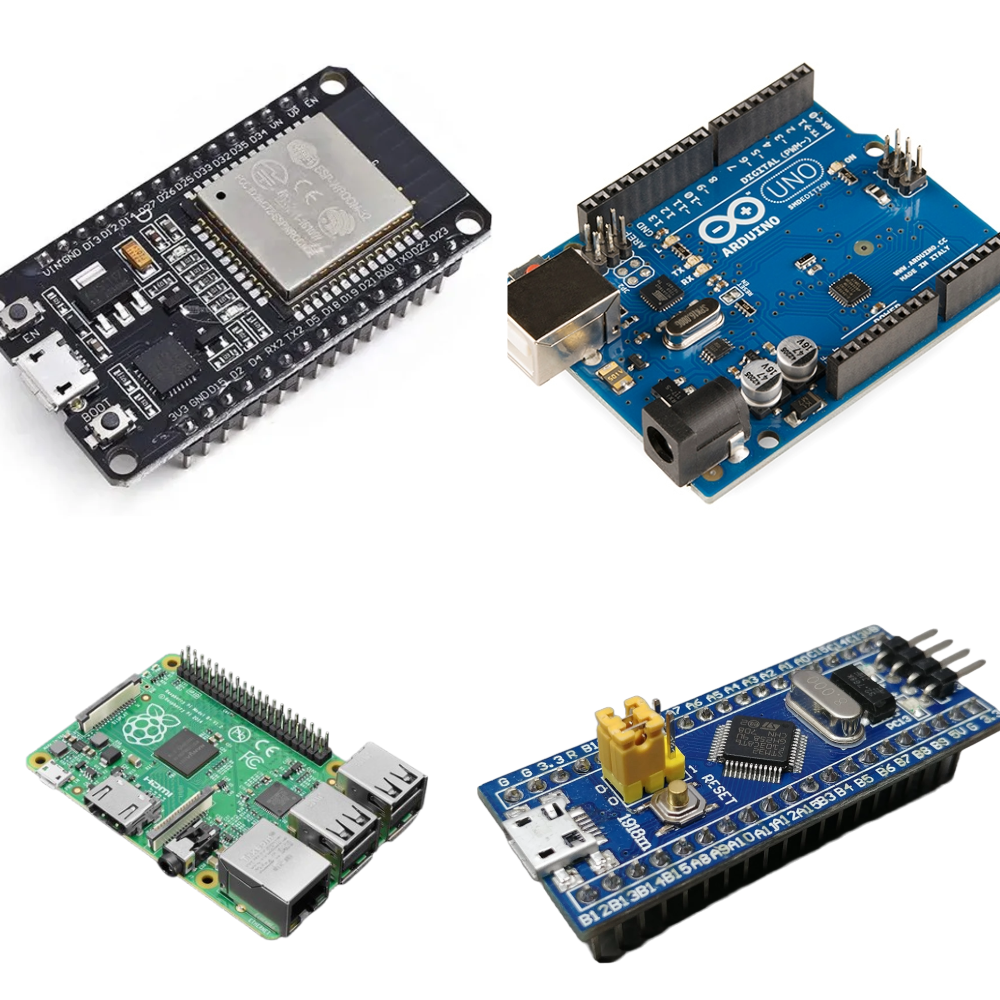
For rapid prototyping and simple control systems, Arduino is often the easiest place to start. For connected IoT devices requiring Wi-Fi or Bluetooth, ESP32 is frequently an excellent choice. For professional embedded products requiring precise real-time control, advanced peripherals, low power consumption, and greater hardware scalability, STM32 is one of the strongest options. For products requiring Linux, advanced networking, computer vision, edge computing, databases, or sophisticated user interfaces, Raspberry Pi may be the better platform.
In some products, the best solution is actually a combination of two platforms.
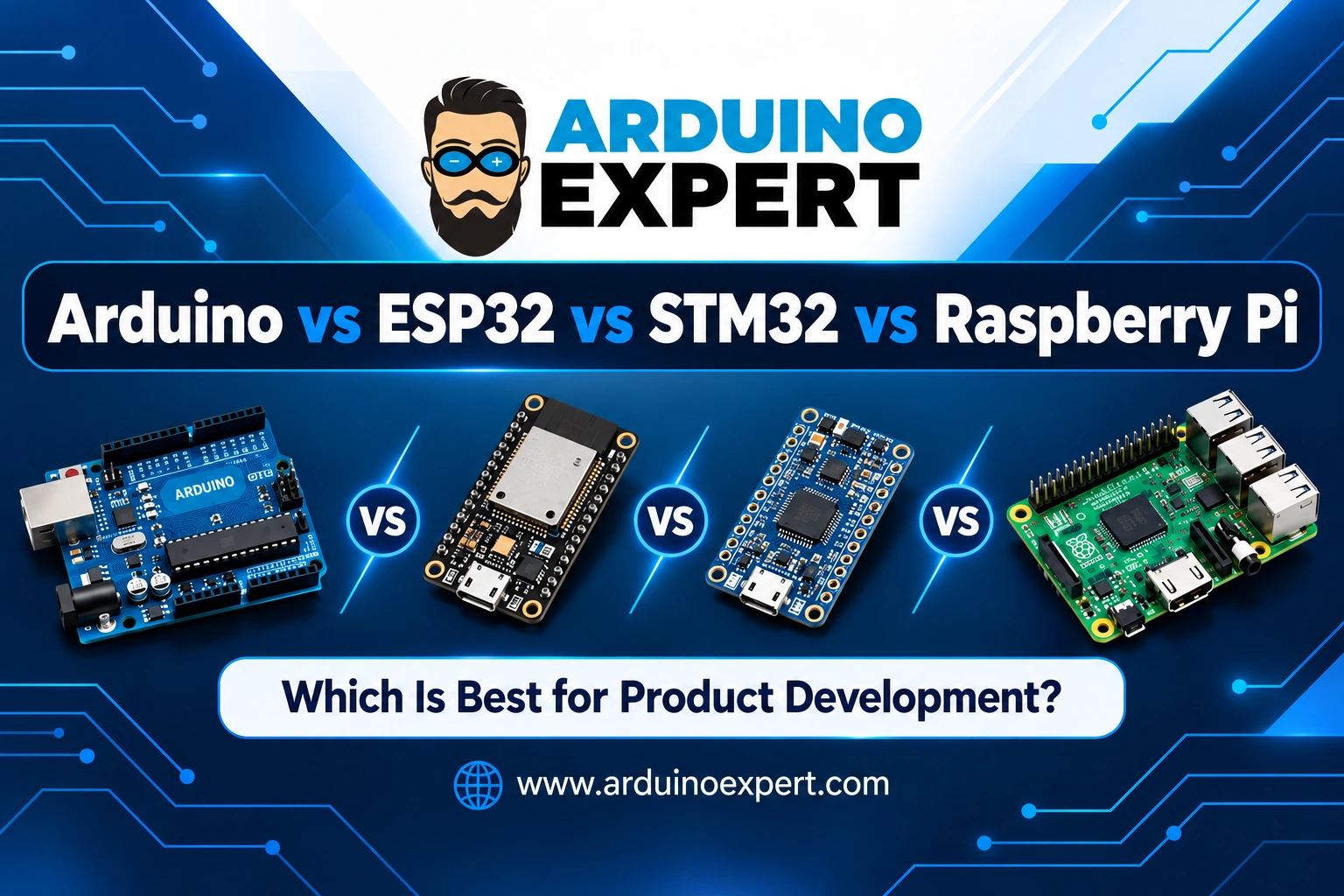
In this guide, we compare Arduino vs ESP32 vs STM32 vs Raspberry Pi for product development, including performance, connectivity, real-time capability, power consumption, prototyping, IoT, industrial applications, production scalability, and commercial product design.
Arduino vs ESP32 vs STM32 vs Raspberry Pi: Quick Comparison
Before looking at each platform in detail, here is a high-level comparison.
| Feature | Arduino | ESP32 | STM32 | Raspberry Pi |
|---|---|---|---|---|
| Platform type | Microcontroller ecosystem | Microcontroller/SoC | Microcontroller family | Single-board computer |
| Best for | Rapid prototyping and control | IoT and wireless products | Professional embedded systems | Linux and high-level computing |
| Development difficulty | Easy | Easy–Medium | Medium–Advanced | Medium |
| Real-time control | Very good | Very good | Excellent | Limited without additional hardware |
| Wi-Fi | Depends on board | Usually integrated on popular variants | Depends on MCU/external hardware | Integrated on many models |
| Bluetooth | Depends on board | Available on many variants | Selected families/external hardware | Integrated on many models |
| Power consumption | Low | Low | Very low to moderate | Relatively high |
| Boot time | Very fast | Very fast | Very fast | Slower because of operating system |
| Operating system | Usually none | Usually RTOS/bare metal | Bare metal/RTOS | Linux |
| IoT applications | Good | Excellent | Excellent | Excellent |
| Motor control | Good | Good | Excellent | Usually requires external controller/interface |
| Battery products | Good | Excellent | Excellent | Less suitable for very low-power products |
| Advanced GUI | Limited | Moderate | Moderate–Advanced | Excellent |
| Computer vision | Limited | Limited–Moderate | Possible on higher-end devices | Excellent |
| Custom PCB integration | Yes | Yes | Yes | Usually via module/Compute Module or SBC |
| Production scalability | Good with proper hardware design | Excellent | Excellent | Good for appropriate applications |
| Typical product complexity | Low–Medium | Medium | Medium–High | High-level software systems |
The table is intentionally general because each platform represents a large ecosystem rather than one fixed specification.
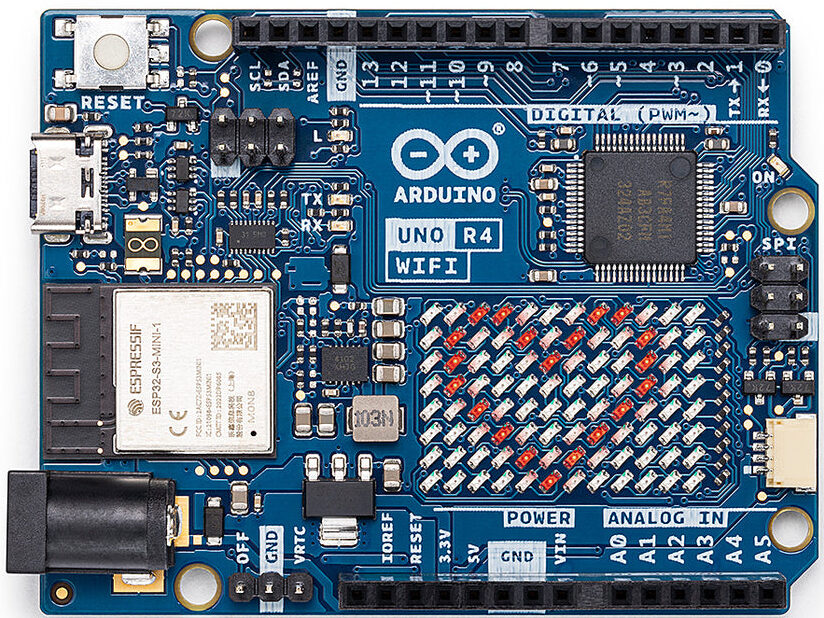
For example, modern Arduino boards range from relatively simple microcontroller boards to much more powerful professional platforms. The Arduino UNO R4 Minima itself uses a 32-bit Renesas RA4M1 Arm Cortex-M4 MCU running at 48 MHz with 256 KB of flash and 32 KB of SRAM.
Similarly, ESP32 and STM32 represent entire families containing devices optimized for different requirements.
What Is Arduino?
Arduino is an open-source hardware and software ecosystem designed to make microcontroller development easier.
It became popular because developers could connect sensors, motors, displays, relays, LEDs, and communication modules to a development board and quickly write firmware using a relatively simple programming environment.
Arduino remains extremely useful for:
- Product concept validation
- Rapid hardware prototyping
- Sensor integration
- Motor and actuator control
- Data acquisition
- Automation
- Robotics
- Educational systems
- Laboratory equipment
- Proof-of-concept development
- Custom electronic devices
Modern Arduino hardware is also significantly more capable than early Arduino boards.
For example, the Arduino UNO R4 family moved the classic UNO platform to a 32-bit Arm Cortex-M4 microcontroller, while maintaining the familiar Arduino development experience.
Advantages of Arduino for Product Development
1. Very Fast Prototyping
Arduino’s biggest advantage is development speed.
There are thousands of libraries for:
- Sensors
- Displays
- Motor drivers
- GPS modules
- Communication modules
- ADCs
- DACs
- RFID
- NFC
- LoRa
- Cellular modules
- Relays
- Industrial interfaces
A prototype that might otherwise require significant low-level firmware development can often be demonstrated quickly using Arduino-compatible libraries.
2. Large Development Community
Because Arduino has a huge global community, finding examples, libraries, troubleshooting information, and compatible hardware is relatively easy.
This can significantly reduce early development time.
3. Excellent for Proof-of-Concept Development
If your first goal is to answer:
“Can this product idea work?”
Arduino is often an excellent platform.
Developers can test sensors, algorithms, actuators, communication methods, and user interactions before investing in a custom PCB.
4. Easy Hardware Integration
Arduino development boards expose GPIO, analog inputs, communication buses, PWM, and other interfaces in an accessible format.
This makes hardware experimentation simple.
Limitations of Arduino
Arduino is sometimes misunderstood as a single microcontroller platform. It is actually an ecosystem containing many different boards and processor families.
That means whether Arduino is appropriate for a commercial product depends heavily on the specific board and MCU being used.
Potential limitations can include:
- Limited processing power on entry-level boards
- Limited RAM or flash on simpler devices
- Wireless connectivity requiring additional hardware on some boards
- Development boards being physically larger than necessary
- Higher per-unit cost compared with using the underlying MCU directly
- Some Arduino libraries being optimized for simplicity rather than production robustness
For commercial development, an Arduino board is therefore often used during prototyping before the electronics are moved to a custom PCB containing the required microcontroller and components.
Arduino is best when:
- Development speed is important
- The product has moderate processing requirements
- You need to validate an idea rapidly
- The system primarily reads sensors and controls outputs
- You want to minimize firmware complexity during prototyping
At Arduino Expert, we use Arduino for everything from initial prototypes to complete automation and embedded-control systems.
Learn more about our Arduino Project Development Services
What Is ESP32?
ESP32 is a family of highly integrated microcontrollers and system-on-chip devices from Espressif Systems.
ESP32 became extremely popular because it combines microcontroller functionality with wireless connectivity at relatively low cost.
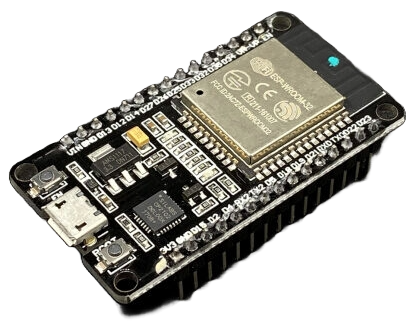
Many ESP32 variants include:
- Wi-Fi
- Bluetooth or Bluetooth Low Energy
- Multiple GPIO interfaces
- ADC
- PWM
- SPI
- I2C
- UART
- Timers
- Low-power modes
- Security features
For example, the ESP32-S3 combines dual-core processing with integrated 2.4 GHz Wi-Fi and Bluetooth Low Energy and provides numerous peripherals. Espressif specifically lists smart home, industrial automation, healthcare, consumer electronics, agriculture, sensor hubs, cameras, speech recognition, and image recognition among its application areas.
This makes ESP32 particularly attractive for modern connected products.
Why ESP32 Is Excellent for IoT Product Development
1. Built-In Wi-Fi
Wireless connectivity often adds significant complexity to embedded product design.
With ESP32, Wi-Fi functionality is integrated into the platform, reducing the need for a separate wireless MCU or module in many designs.
ESP32 is therefore widely used for:
- Wi-Fi sensors
- Smart-home products
- Cloud-connected devices
- Remote monitoring systems
- Wireless controllers
- Smart appliances
- Industrial IoT devices
2. Bluetooth and BLE
Many ESP32 families also provide Bluetooth Low Energy.
BLE is useful for products that communicate with:
- Smartphones
- Tablets
- Local configuration apps
- Beacons
- Wearables
- Wireless sensors
A common commercial architecture is:
ESP32 Device → Bluetooth → Mobile App
The app configures Wi-Fi credentials, device settings, calibration parameters, or user preferences.
After configuration, the ESP32 can communicate directly with a cloud server over Wi-Fi.
3. Strong Processing Capability
Compared with many traditional beginner microcontrollers, ESP32 devices provide substantial processing capability.
The ESP32-S3, for example, provides dual 32-bit Xtensa LX7 cores operating up to 240 MHz along with 512 KB of internal SRAM and support for external flash and PSRAM configurations.
This allows ESP32 products to handle tasks such as:
- Networking
- Sensor processing
- Local control
- Web servers
- MQTT
- Encryption
- Displays
- Audio
- Signal processing
- Edge inference for selected workloads
4. Good Low-Power Options
ESP32 supports multiple power-management modes, making it useful for battery-powered IoT devices.
A device might wake periodically, collect a sensor measurement, transmit the data, and return to deep sleep.
This architecture is common in:
- Agricultural sensors
- Environmental monitoring
- Remote telemetry
- Asset monitoring
- Smart meters
- Wireless sensor nodes
5. Excellent Cost-to-Feature Ratio
Because wireless functionality and processing are integrated into one platform, ESP32 often provides an excellent balance between:
cost + performance + connectivity + development speed.
ESP32 Limitations
ESP32 is extremely capable, but it is not automatically the best choice for every embedded system.
Potential challenges include:
- Wireless stacks adding firmware complexity
- More complicated power optimization than extremely simple MCUs
- Precise real-time applications requiring careful firmware architecture
- RF PCB layout requirements
- Antenna placement requirements
- Certification considerations for commercial wireless products
- Some applications requiring peripherals better supported by dedicated industrial MCU families
ESP32 is best when:
- Wi-Fi is required
- Bluetooth/BLE is required
- The device communicates with a mobile application
- MQTT or cloud connectivity is needed
- Cost is important
- The product requires moderate processing capability
- Battery-powered wireless operation is required
Learn more about our ESP32 Project Development Services
What Is STM32?
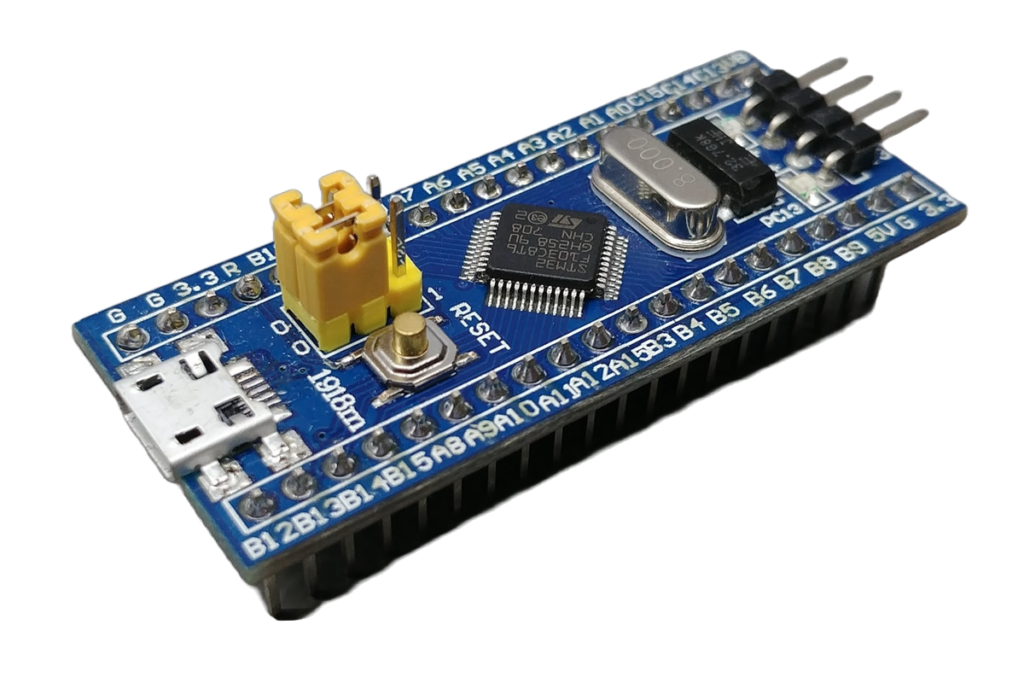
STM32 is STMicroelectronics’ extensive family of 32-bit Arm Cortex-M microcontrollers.
Unlike comparing one Arduino board with one ESP32 board, STM32 includes a very large range of microcontrollers designed for different product requirements.
ST currently organizes STM32 MCUs across areas including mainstream, ultra-low-power, high-performance, and wireless devices. The family spans many performance and peripheral combinations, allowing engineers to select a microcontroller much more precisely for a production design.
This makes STM32 particularly attractive for professional embedded product development.
Why STM32 Is Popular for Commercial Embedded Products
1. Excellent Real-Time Control
STM32 is particularly strong when precise timing matters.
Applications include:
- Motor control
- Robotics
- Power electronics
- Industrial control
- Medical electronics
- Measurement systems
- Data acquisition
- Automotive electronics
- Real-time signal processing
Unlike Linux-based computers, firmware running on an STM32 can interact directly with hardware with highly predictable timing.
2. Huge MCU Selection
One of STM32’s biggest advantages is scalability.
A product may begin with a relatively inexpensive MCU and move to a more powerful STM32 while remaining within the broader ecosystem.
The portfolio includes families designed for:
- Cost-sensitive applications
- General-purpose embedded systems
- Ultra-low-power devices
- High-performance applications
- Wireless connectivity
- Advanced security
- Graphics
- Motor control
- Edge AI
ST’s current portfolio ranges from entry-level Cortex-M0+ devices through powerful Cortex-M33, Cortex-M7, and newer higher-performance devices.
3. Advanced Peripherals
Depending on the MCU, STM32 devices may offer advanced:
- Timers
- PWM
- ADC
- DAC
- DMA
- CAN/FDCAN
- UART
- SPI
- I2C/I3C
- USB
- Ethernet
- Cryptographic hardware
- External-memory interfaces
- LCD controllers
This is extremely valuable when designing specialized hardware.
4. Motor Control
STM32 has a particularly strong ecosystem for motor-control applications.
ST provides dedicated hardware and software resources for permanent-magnet synchronous motors, BLDC motors, stepper motors, and other motor-control applications.
This makes STM32 an excellent choice for:
- Electric motors
- Pumps
- Robotics
- CNC equipment
- Industrial machines
- Drones
- Electric mobility
- Precision actuators
5. Low-Power Product Development
STM32 also offers dedicated ultra-low-power families.
This is important for products that must operate for months or years from batteries.
Applications include:
- Wearables
- Medical sensors
- Smart meters
- Environmental sensors
- Tracking systems
- Portable instruments
- Wireless sensing devices
6. Production-Oriented Ecosystem
STM32CubeIDE, STM32CubeMX, HAL/LL libraries, debuggers, development boards, RTOS support, middleware, and manufacturer documentation provide a comprehensive environment for professional firmware development.
STM32 Limitations
The main drawback of STM32 compared with Arduino is the learning curve.
Professional STM32 development may require understanding:
- MCU clock configuration
- Interrupts
- DMA
- Memory architecture
- Hardware timers
- RTOS concepts
- Peripheral configuration
- Bootloaders
- Debugging
- Firmware architecture
- Power modes
This additional complexity provides much greater control, but development can take longer.
STM32 is best when:
- Real-time performance is critical
- Precise motor control is required
- Low power consumption is critical
- Advanced hardware peripherals are needed
- The product will be mass-produced
- Long-term MCU scalability matters
- Professional embedded firmware architecture is required
Learn more about our STM32 Development Services
What Is Raspberry Pi?
Raspberry Pi is fundamentally different from most Arduino, ESP32, and STM32 systems.
Most mainstream Raspberry Pi boards are single-board computers, not conventional microcontroller development boards.
They can run a complete operating system such as Linux and execute sophisticated software written in:
- Python
- C
- C++
- JavaScript
- Java
- Go
- Rust
- Other Linux-compatible languages
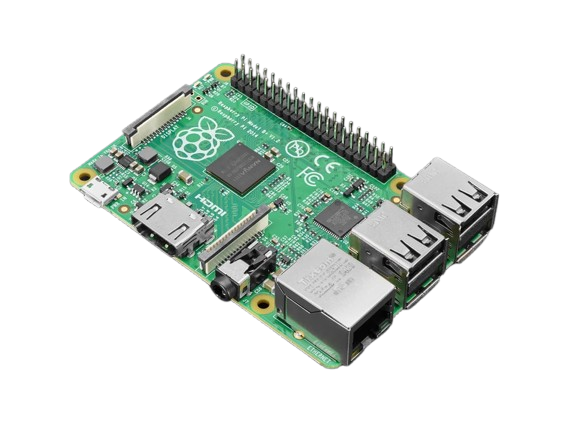
A modern Raspberry Pi therefore operates much more like a compact computer than a traditional microcontroller.
For example, Raspberry Pi 5 uses a 2.4 GHz quad-core 64-bit Arm Cortex-A76 CPU and supports advanced graphics, dual display output, Wi-Fi, Bluetooth, and high-speed interfaces.
Note: Raspberry Pi also produces microcontroller-based products such as the Raspberry Pi Pico family. In this article, “Raspberry Pi” primarily refers to Linux-capable Raspberry Pi single-board computers because that is the relevant comparison for product architecture.
Why Raspberry Pi Is Useful for Product Development
1. Linux Operating System
Linux changes what can be done at the edge.
A Raspberry Pi can run:
- Databases
- Web servers
- MQTT brokers
- Node-RED
- Docker containers
- Python applications
- Computer-vision software
- Machine-learning frameworks
- Complex networking tools
- Local dashboards
- APIs
- File systems
- Remote administration software
These tasks would be difficult or impractical on many traditional microcontrollers.
2. Edge Computing
Raspberry Pi is useful when a product must process substantial data locally.
Examples include:
- Machine vision
- Camera analytics
- AI inference
- Local databases
- Industrial gateways
- Protocol conversion
- Data logging
- Advanced automation controllers
3. Graphical User Interfaces
Products requiring sophisticated touchscreen interfaces may benefit from Raspberry Pi.
Examples include:
- Medical equipment
- Kiosks
- Industrial HMIs
- Smart appliances
- Laboratory instruments
- Monitoring stations
Linux provides access to mature graphical frameworks and application-development tools.
4. Networking
Raspberry Pi is well suited to applications involving:
- Ethernet
- Wi-Fi
- Bluetooth
- VPN
- Web servers
- Cloud APIs
- MQTT
- SSH
- Databases
- Remote updates
This makes it particularly attractive for industrial and commercial IoT gateways.
Raspberry Pi Limitations
Raspberry Pi’s computing power comes with several tradeoffs.
1. Higher Power Consumption
A Linux SBC normally consumes considerably more power than a microcontroller.
This makes Raspberry Pi less suitable for small battery-powered products that must operate for months or years.
2. Operating-System Boot Time
Microcontrollers normally begin executing firmware almost immediately.
A Raspberry Pi must boot an operating system.
For some products, this difference matters.
3. Real-Time Control
Standard Linux is not inherently designed for hard real-time hardware control.
For tasks requiring extremely precise motor timing, high-speed pulse generation, or deterministic control loops, a dedicated microcontroller such as STM32 or ESP32 may be more appropriate.
4. System Complexity
Linux also introduces:
- File-system management
- Operating-system updates
- Security maintenance
- Package management
- Boot configuration
- Storage considerations
Those are manageable, but they must be considered during product design.
Raspberry Pi is best when:
- Linux is required
- Computer vision is required
- Edge AI is required
- A sophisticated touchscreen GUI is needed
- A local database is required
- The device acts as an IoT gateway
- Complex networking is required
- High-level software is more important than ultra-low-power operation
Learn more about our Raspberry Pi Development Services
Arduino vs ESP32
Arduino and ESP32 are commonly compared because both are frequently used for prototyping and embedded development.
For a simple controller without wireless communication, Arduino may be easier.
For an IoT device requiring Wi-Fi or Bluetooth, ESP32 often provides a more integrated solution.
Choose Arduino when:
- You want the simplest development experience
- The system primarily reads sensors and controls outputs
- Wireless connectivity is unnecessary
- You want to prototype very quickly
- Existing Arduino libraries simplify your project
Choose ESP32 when:
- Wi-Fi is required
- Bluetooth/BLE is required
- You need MQTT
- You need mobile-app communication
- You need cloud connectivity
- You need more processing capability
- You are developing a low-cost connected device
Winner for IoT: ESP32
Winner for simplicity: Arduino
ESP32 vs STM32
The choice between ESP32 vs STM32 for product development is more interesting.
Both can be used in professional products, but their strengths are different.
ESP32 offers extremely convenient wireless integration.
STM32 offers an enormous MCU portfolio with strong real-time performance, advanced peripherals, motor-control capabilities, low-power families, and fine-grained product selection.
Choose ESP32 when:
- Wi-Fi is a core requirement
- Bluetooth is a core requirement
- Cost-effective wireless connectivity matters
- You need smartphone integration
- The product is primarily an IoT device
Choose STM32 when:
- Deterministic real-time control matters
- You need advanced timers
- You need precise ADC/DAC functionality
- Motor control is important
- CAN/FDCAN is important
- Ultra-low power is critical
- You require a broader choice of MCU configurations
ESP32 vs STM32 Winner?
There is no universal winner.
For wireless IoT products: ESP32 often wins.
For advanced embedded control: STM32 often wins.
Arduino vs STM32
Arduino generally prioritizes ease of development.
STM32 generally provides deeper low-level control and more choices for production hardware.
This does not mean Arduino cannot be used professionally. Modern Arduino platforms can be highly capable.
However, for complex production products, engineers often eventually work directly with the MCU and manufacturer development ecosystem.
Choose Arduino for:
- Proof of concepts
- Fast prototypes
- Moderate-complexity controllers
- Educational systems
- Short development cycles
Choose STM32 for:
- Professional firmware
- Industrial controllers
- Motor control
- High-speed data acquisition
- Power-sensitive devices
- Complex embedded systems
- High-volume custom PCB products
ESP32 vs Raspberry Pi
Although both can provide Wi-Fi and Bluetooth, ESP32 and Raspberry Pi are fundamentally different platforms.
ESP32 is a microcontroller-based platform.
Raspberry Pi is generally a Linux computer.
ESP32 advantages:
- Lower power consumption
- Faster startup
- Better direct hardware timing
- Lower product cost for many applications
- Better for battery-powered devices
Raspberry Pi advantages:
- Linux
- More processing power
- Complex application software
- Databases
- Advanced networking
- Computer vision
- Rich graphical interfaces
- Edge AI
Example
Consider a smart camera.
If the device only detects motion, reads sensors, and sends small amounts of information to the cloud, ESP32 may be sufficient.
If the device must process high-resolution video, run computer-vision algorithms, manage local storage, and provide a sophisticated web dashboard, Raspberry Pi may be more appropriate.
Arduino vs Raspberry Pi
A useful way to understand this comparison is:
Arduino controls hardware. Raspberry Pi runs complex software.
That statement is simplified, but it highlights their typical strengths.
Arduino is generally better for:
- Sensors
- Motors
- Relays
- Precise timing
- Embedded control
Raspberry Pi is generally better for:
- Linux applications
- Databases
- Video
- Web applications
- Machine learning
- Advanced GUIs
Sometimes the best solution uses both.
STM32 vs Raspberry Pi
STM32 and Raspberry Pi often appear in very different parts of a product architecture.
An STM32 might:
- Read sensors
- Generate PWM
- Control motors
- Monitor safety inputs
- Execute control loops
A Raspberry Pi might:
- Display the user interface
- Store data
- Communicate with servers
- Process images
- Run AI
- Manage networking
This leads to an important product-development principle:
You Do Not Always Have to Choose Only One Platform
Some of the best embedded products use multiple processors.
Hybrid Architectures: Using ESP32 or STM32 with Raspberry Pi
A sophisticated system may combine a microcontroller with a Linux computer.
For example:
STM32 → Raspberry Pi → Cloud
The STM32 handles:
- Motor control
- Sensor acquisition
- Safety logic
- Precise timing
The Raspberry Pi handles:
- Touchscreen UI
- Database
- Cloud synchronization
- Computer vision
- Remote access
Another architecture might be:
ESP32 Sensor Nodes → Wi-Fi/MQTT → Raspberry Pi Gateway → Cloud
The ESP32 devices collect data remotely.
The Raspberry Pi acts as:
- MQTT broker
- Local database
- Edge-processing computer
- Protocol gateway
- Internet gateway
This architecture is useful in:
- Smart factories
- Agriculture
- Building automation
- Environmental monitoring
- Energy management
- Industrial IoT
Which Platform Is Best for IoT Product Development?
For most compact Wi-Fi/Bluetooth IoT products:
ESP32 is often the best starting point.
It provides wireless connectivity, GPIO, low-power functionality, and good processing capability within one platform.
However:
Use STM32 when the IoT device requires advanced real-time control, specialized peripherals, or very aggressive power optimization.
Use Raspberry Pi when the IoT device is really an edge gateway or computing system.
Use Arduino when you need rapid validation or relatively simple IoT hardware.
Which Is Best for Industrial Automation?
Industrial automation frequently requires:
- Reliable communications
- Real-time control
- Motor control
- Sensor acquisition
- CAN
- RS485
- Modbus
- Ethernet
- Fault handling
- Watchdogs
- High reliability
For the real-time controller, STM32 is often an excellent choice.
ESP32 can also work well for wireless monitoring, gateways, dashboards, and auxiliary controls.
Raspberry Pi is useful for supervisory control, local dashboards, data logging, protocol conversion, and industrial edge computing.
A sophisticated industrial system may therefore use all three.
Which Is Best for Robotics?
The answer depends on the robot.
Simple robot
Arduino may be sufficient.
Wi-Fi or Bluetooth robot
ESP32 may be better.
High-performance motor-control robot
STM32 may be better.
Robot requiring vision or AI
Raspberry Pi may be better for high-level processing.
Advanced commercial robot
A combination is often ideal:
STM32 for motion control + Raspberry Pi for vision, AI, navigation, and GUI.
Which Is Best for Battery-Powered Products?
Power consumption becomes extremely important in:
- Wearables
- Remote sensors
- Tracking devices
- Environmental monitors
- Wireless instruments
- Portable medical devices
STM32 offers extensive ultra-low-power MCU options, while ESP32 is particularly attractive when low-power operation must be combined with Wi-Fi or BLE.
Raspberry Pi Linux boards are generally less suitable when extremely long battery life is a primary requirement.
Which Is Best for Motor Control?
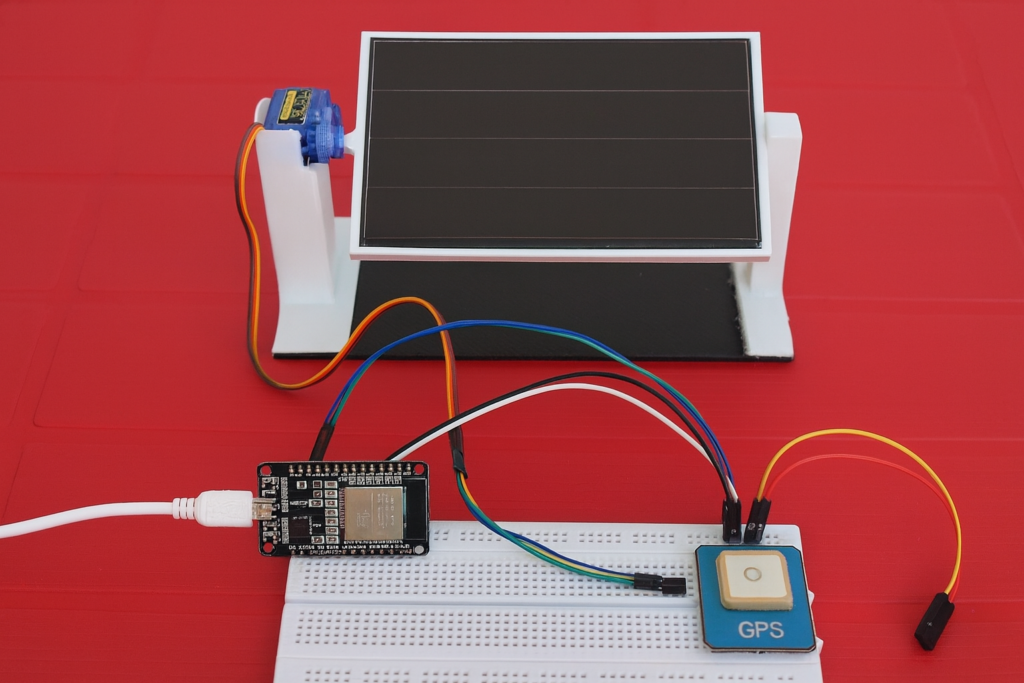
For basic motors and servos:
Arduino or ESP32 may be sufficient.
For advanced:
- BLDC control
- PMSM control
- Field-oriented control
- Precise PWM
- Encoder feedback
- High-speed current sensing
- Industrial motion control
STM32 is usually the stronger platform.
ST maintains a dedicated STM32 motor-control ecosystem covering BLDC, PMSM, and other motor applications.
Which Is Best for AI and Computer Vision?
This depends on the AI workload.
ESP32 and high-performance STM32 devices can perform embedded machine-learning inference for selected low-power tasks.
For example, ESP32-S3 includes vector instructions intended to accelerate neural-network and signal-processing workloads.
ST also now offers high-performance STM32 devices targeting edge AI, including MCU families with dedicated acceleration hardware.
However, when the product requires:
- Linux AI frameworks
- Large neural networks
- Advanced image processing
- High-resolution cameras
- Complex computer vision
a Raspberry Pi-class processor will generally provide much greater software flexibility and computing capability.
Which Platform Is Best for Mass Production?
This is where product development differs from hobby development.
A prototype development board is not necessarily the final production hardware.
During product development, engineers must consider:
- Component cost
- Component availability
- PCB size
- Power consumption
- EMC
- ESD protection
- Connectors
- Manufacturing
- Testing
- Firmware updates
- Security
- Certifications
- Supply-chain risk
- Product lifetime
Arduino in Production
Arduino is excellent for prototyping.
For volume production, many designs eventually integrate the appropriate MCU or production-oriented module onto a custom PCB.
ESP32 in Production
ESP32 is widely suited to custom PCB development.
Certified wireless modules can also simplify certain RF and certification challenges, although final product regulatory requirements still need to be evaluated.
STM32 in Production
STM32 is particularly strong for custom production PCBs because engineers can select devices based on exact requirements for:
- Memory
- Package
- peripherals
- processing performance
- power consumption
- cost
Raspberry Pi in Production
Raspberry Pi can also be integrated into commercial systems.
For production products requiring Linux computing, Raspberry Pi modules and embedded architectures can be considered instead of designing around a full development-board form factor.
Prototype vs Production: Do Not Choose a Platform Only by Prototype Cost
One common mistake is choosing a controller because a development board costs a few dollars less.
For a commercial product, the total development cost matters far more.
Consider:
- Engineering time
- Firmware complexity
- PCB complexity
- Debugging
- Certification
- Testing
- Manufacturing
- Maintenance
- Field updates
- Product returns
Saving $2 on a microcontroller does not help if it adds several weeks of engineering work.
Likewise, choosing a powerful Raspberry Pi simply because development is easy may create unnecessary cost and power consumption if the final product only needs a small microcontroller.
The correct platform minimizes the total product-development cost, not simply the development-board purchase price.
How to Choose Between Arduino, ESP32, STM32, and Raspberry Pi
Before selecting hardware, ask the following questions.
1. Does the Product Need Wi-Fi?
If yes, strongly consider ESP32 or Raspberry Pi.
STM32 can also support connected products using suitable wireless MCUs or external connectivity hardware.
2. Does It Need Bluetooth?
ESP32 is an excellent choice for many Bluetooth Low Energy products.
Other platforms can also support Bluetooth depending on the selected hardware.
3. Does It Need Linux?
If yes, Raspberry Pi is the obvious choice among these four categories.
4. Does It Need Hard Real-Time Control?
Strongly consider STM32, ESP32, or another microcontroller.
5. Is It Battery Powered?
Consider ESP32 or low-power STM32 devices.
6. Does It Need Advanced Motor Control?
Consider STM32.
7. Does It Need Computer Vision?
Consider Raspberry Pi or another application processor.
8. Does It Need a Complex Touchscreen Interface?
Raspberry Pi may simplify the software significantly, although high-end microcontrollers can also support embedded GUIs.
9. Is Development Speed More Important Than Optimization?
Arduino can be extremely useful.
10. Will the Product Be Mass Produced?
Think beyond development boards and select an architecture that can transition to:
- Custom PCB design
- Production firmware
- Manufacturing testing
- Certification
- Long-term component sourcing
Decision Matrix
Here is a simple selection guide.
| Product Requirement | Recommended Platform |
|---|---|
| Simple electronic prototype | Arduino |
| Wi-Fi IoT sensor | ESP32 |
| Bluetooth mobile-app device | ESP32 |
| Smart-home device | ESP32 |
| Industrial motor controller | STM32 |
| Low-power professional embedded product | STM32 |
| High-speed data acquisition | STM32 |
| CAN-based controller | STM32 |
| Linux gateway | Raspberry Pi |
| Computer-vision system | Raspberry Pi |
| Edge computing | Raspberry Pi |
| Advanced local database | Raspberry Pi |
| Touchscreen Linux application | Raspberry Pi |
| Rapid proof of concept | Arduino |
| Wireless prototype | ESP32 |
| Professional real-time embedded system | STM32 |
| AI + precision motor-control robot | Raspberry Pi + STM32 |
| Industrial IoT gateway | Raspberry Pi + STM32/ESP32 |
| Wireless sensor network | ESP32 + gateway |
Arduino vs ESP32 vs STM32 vs Raspberry Pi: Which One Should You Choose?
There is no single platform that is best for every product.
The correct choice depends on the product architecture.
Choose Arduino if:
You want fast prototyping, simplicity, a large library ecosystem, and easy hardware integration.
Choose ESP32 if:
You need Wi-Fi, Bluetooth, IoT connectivity, smartphone integration, good performance, and low cost.
Choose STM32 if:
You need professional real-time control, low power, advanced peripherals, motor control, scalability, and production-oriented embedded hardware.
Choose Raspberry Pi if:
You need Linux, advanced networking, computer vision, databases, edge computing, AI, or sophisticated application software.
And if your product needs both precision hardware control and advanced computing:
Use a hybrid architecture.
A Raspberry Pi working alongside an STM32 or ESP32 can provide the strengths of both worlds.
From Prototype to Production
Selecting a microcontroller is only one part of product development.
A successful embedded product may require:
- Product architecture
- Electronic circuit design
- Component selection
- PCB design
- Embedded firmware
- IoT connectivity
- Mobile application development
- Web dashboard development
- Cloud integration
- Mechanical design
- Enclosure development
- 3D printing
- Prototype assembly
- Testing
- Debugging
- Design optimization
- Manufacturing support
At Arduino Expert, we help startups, businesses, engineers, and product developers turn ideas into working embedded and IoT products.
Our team works with:
- Arduino
- ESP32
- STM32
- Raspberry Pi
- Sensors and actuators
- IoT platforms
- Custom PCB design
- Mobile and web applications
- Automation
- Robotics
- Embedded firmware
Whether you need a proof of concept or want to transform an existing prototype into a custom production-ready device, choosing the right hardware architecture at the beginning can save significant development time and cost.
Have a product idea but are unsure whether Arduino, ESP32, STM32, or Raspberry Pi is the right platform?
Contact Arduino Expert to discuss your project requirements and choose an appropriate hardware, firmware, and software architecture.
Conclusion
The Arduino vs ESP32 vs STM32 vs Raspberry Pi decision should not be based simply on which board has the fastest processor or the most memory.
Product development requires considering the entire system.
Arduino excels at rapid prototyping and accessible embedded control.
ESP32 is exceptionally useful for connected IoT products requiring Wi-Fi and Bluetooth.
STM32 provides the scalability, real-time capabilities, peripheral options, and power efficiency required by many professional embedded products.
Raspberry Pi provides Linux, substantial computing capability, advanced networking, computer vision, edge processing, and sophisticated software support.
For many commercial products, the ideal design may even combine multiple platforms.
The best hardware is ultimately the hardware that satisfies the product’s performance, power, connectivity, reliability, manufacturing, cost, and long-term support requirements while keeping development practical.
At Arduino Expert, we develop complete embedded and IoT solutions from initial concept and proof of concept through electronics, PCB design, firmware, apps, mechanical design, prototypes, testing, and product-development support.
If you are developing a new product and need help choosing between Arduino, ESP32, STM32, Raspberry Pi, or a custom hybrid architecture, contact Arduino Expert to discuss your requirements.
Frequently Asked Questions
Is ESP32 better than Arduino for product development?
ESP32 is often better when a product requires Wi-Fi, Bluetooth, IoT connectivity, or greater integrated processing capability. Arduino may be easier for simple controllers and rapid proof-of-concept development. The best choice depends on the specific board and application
Is STM32 better than ESP32?
STM32 is often preferable for advanced real-time control, motor control, specialized peripherals, ultra-low-power applications, and highly optimized production hardware. ESP32 is often preferable when integrated Wi-Fi and Bluetooth are central requirements.
Can ESP32 be used in commercial products?
Yes. ESP32 devices and modules are widely suitable for commercial embedded and IoT product designs when the electronics, firmware, RF design, security, testing, and relevant regulatory requirements are handled appropriately.
Can Arduino be used for commercial products?
Yes. Arduino-compatible hardware can be used in commercial products, although many designs transition from development boards to custom PCBs or production-oriented modules to optimize cost, size, reliability, and manufacturing.
Is Raspberry Pi suitable for commercial products?
Yes, particularly for products requiring Linux, networking, edge computing, computer vision, sophisticated GUIs, or high-level software. The design should account for power consumption, storage, boot behavior, thermal management, security, and long-term product requirements.
Is Raspberry Pi a microcontroller?
Mainstream Raspberry Pi boards such as Raspberry Pi 5 are single-board computers capable of running Linux. Raspberry Pi also offers microcontroller products in the Pico family, so the answer depends on which Raspberry Pi product is being discussed.
Which is best for IoT: Arduino, ESP32, STM32, or Raspberry Pi?
ESP32 is an excellent option for compact Wi-Fi/Bluetooth IoT devices. STM32 is strong for professional embedded IoT systems requiring advanced control or low power. Raspberry Pi is excellent for IoT gateways and edge computing. Arduino is useful for rapid IoT prototyping and simpler applications.
Which microcontroller is best for industrial applications?
There is no universal answer, but STM32 is particularly well suited to many industrial embedded-control applications because of its real-time capability, extensive peripheral options, motor-control ecosystem, low-power families, and broad device portfolio.
ESP32 or Raspberry Pi: which is better?
Choose ESP32 for low-power embedded control and wireless IoT devices. Choose Raspberry Pi when you need Linux, more processing power, advanced networking, computer vision, databases, or sophisticated application software.
Can Raspberry Pi and STM32 work together?
Yes. This is a powerful product architecture. STM32 can perform real-time control and sensor acquisition while Raspberry Pi handles Linux applications, networking, databases, GUIs, AI, or computer vision.