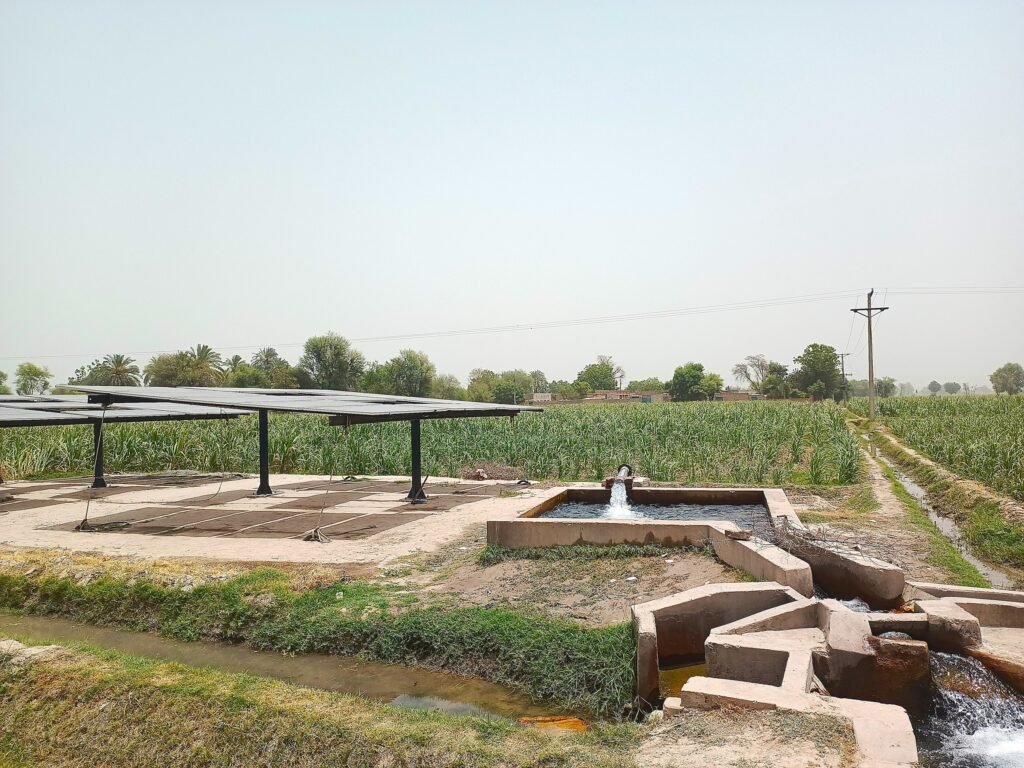
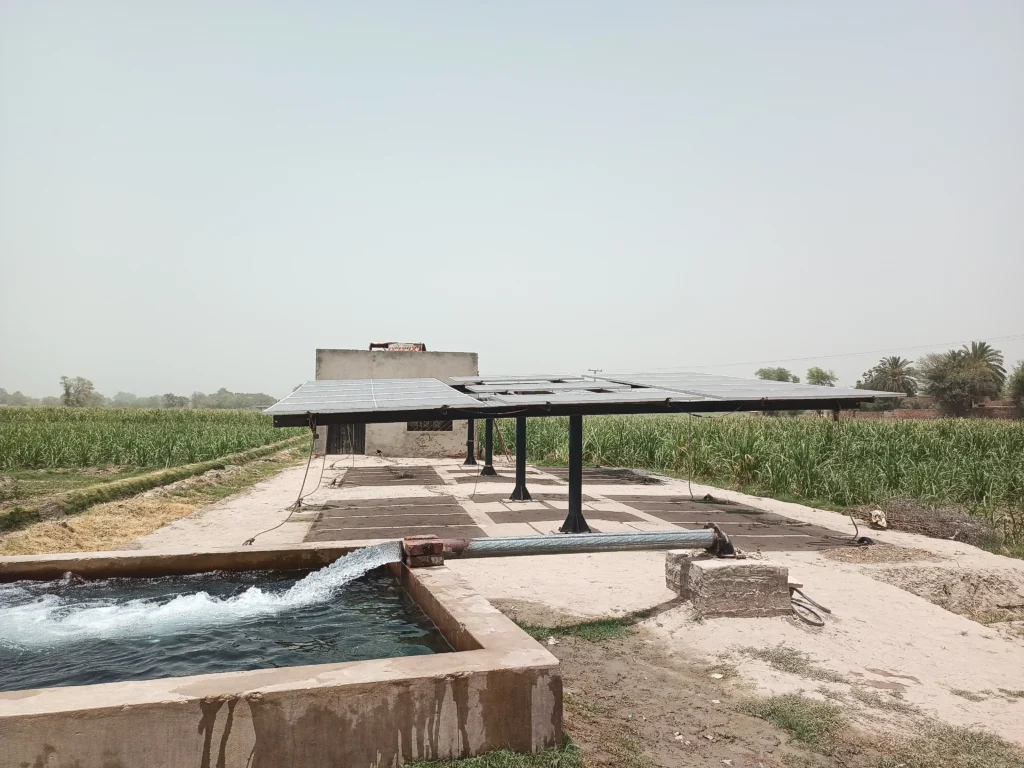
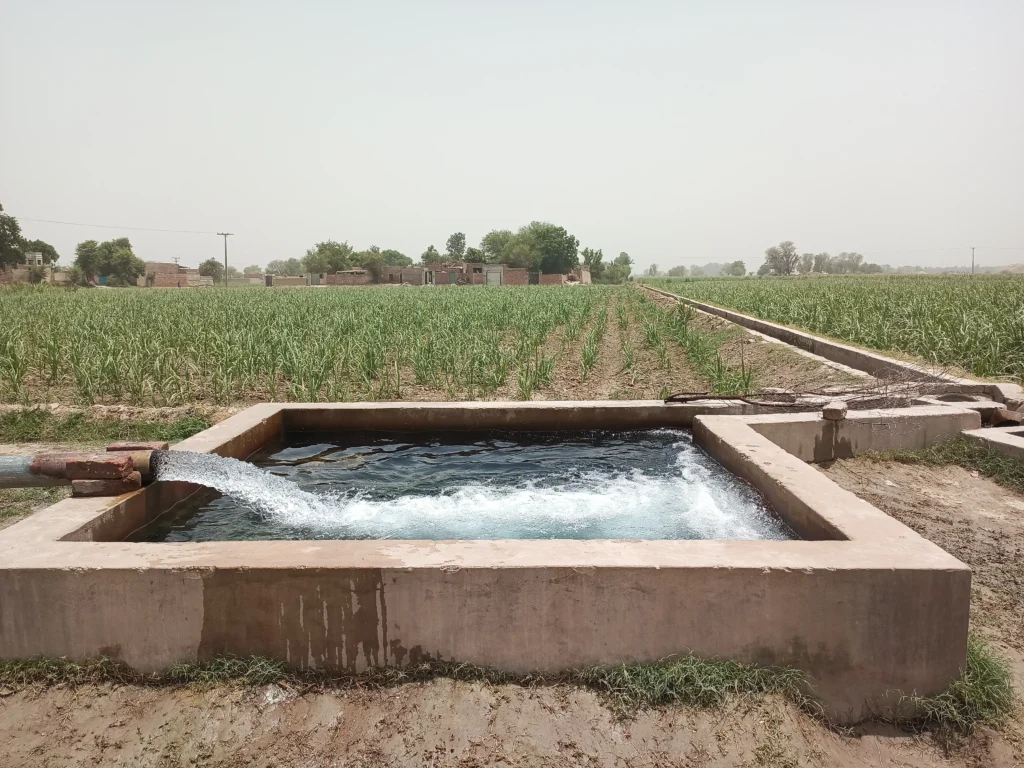
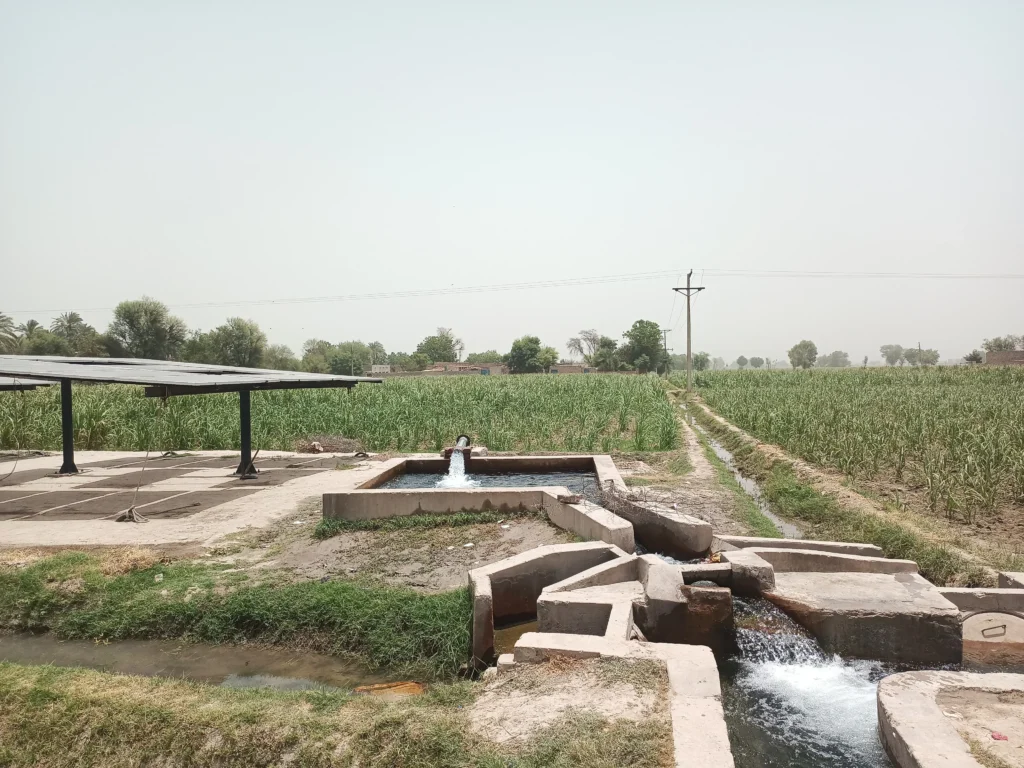
A tubewell may be several kilometers away from a farmhouse, home, office, or equipment dealer. Every time the water pump needs to be started, stopped, or checked, someone may have to physically visit the site.
For farmers and agricultural water users, this can mean unnecessary travel, fuel expense, delayed irrigation, and no easy way to know whether the tubewell is actually running.
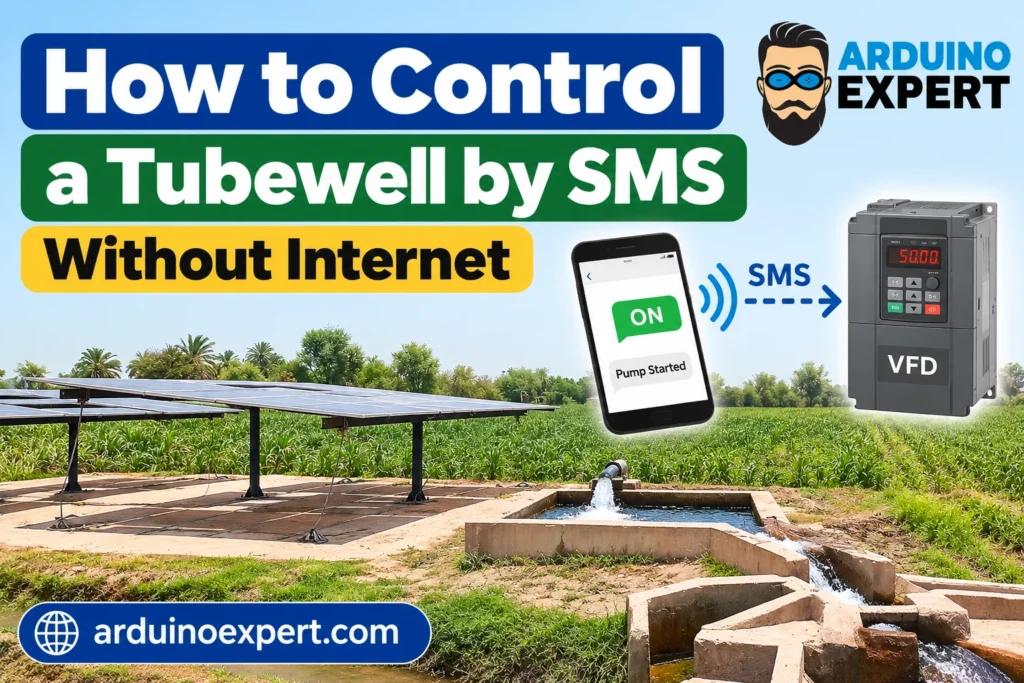
One practical solution is to control the tubewell water pump by SMS without internet.
With a GSM/SMS-based tubewell controller, an authorized user can send a text message from a normal mobile phone to start or stop the pump. A more advanced controller can communicate directly with the pump’s VFD, confirm whether the motor actually started, read operating parameters, report faults, and provide protection and monitoring functions.
Although these systems are commonly installed with solar tubewells, the control method is not limited to solar power. The same principle can be used with many VFD-based tubewell and water-pump systems powered by solar, grid electricity, generator, or another suitable power source.
In this guide, we will explain:
- how SMS tubewell control works;
- how a GSM pump controller can operate without internet;
- different ways to remotely control a VFD-based water pump;
- relay control versus RS485/Modbus control;
- why Wi-Fi is often not the best choice for remote agricultural tubewells;
- other technologies such as 4G, mobile apps, LoRa and PLC/SCADA;
- and how an advanced SMS controller can provide much more than simple ON/OFF operation.
Why Control a Tubewell Remotely?
Many agricultural tubewells are installed far from where the owner normally stays.
Traditional operation may require someone to travel to the control panel simply to:
- start the water pump;
- stop the pump;
- check whether the VFD is running;
- determine whether the system has developed a fault;
- restart the pump after an interruption;
- or verify how long the tubewell has operated.
The problem becomes more significant when one person manages several fields or multiple water-pump installations.
A remote tubewell controller can reduce these unnecessary visits by allowing the pump to be operated or monitored from a mobile phone.
There are several ways to achieve this, including:
- SMS/GSM control
- Relay or VFD digital-input control
- RS485/Modbus VFD communication
- Wi-Fi control
- 4G/Internet and mobile-app control
- LoRa or long-range radio
- PLC/SCADA systems
- Local timer and automatic control
Each method has different advantages, limitations, costs and levels of intelligence.
How Does SMS Tubewell Control Work?
An SMS tubewell controller contains a cellular communication module and a controller connected to the water-pump control system.
A basic installation works something like this:
Mobile Phone → SMS → GSM Controller → Relay/VFD → Water Pump
The user sends a command such as:
ON
The cellular network delivers that SMS to the SIM installed in the controller.
The controller checks whether the sender is authorized and then performs the programmed action.
For example, it may activate a relay connected to the VFD’s start input.
To stop the pump, the user can send:
OFF
This type of remote water-pump control does not require Wi-Fi, broadband internet, a cloud server, or a smartphone app.
It does, however, require a compatible cellular network, an active SIM and SMS service at the installation location.
SMS Control Is Not the Same as Internet Control
One common misunderstanding is that remote mobile control always requires internet access.
It does not.
SMS travels through the mobile operator’s messaging service rather than through the user’s normal internet-data connection.
Therefore, an SMS-based GSM pump controller can operate at a farm where there is no Wi-Fi router or fixed broadband connection, provided compatible cellular SMS service is available.
This makes SMS control attractive for agricultural applications where internet connectivity may be unavailable or inconsistent.
Different Ways to Control a Tubewell Water Pump
There is no single control method suitable for every installation.
The correct method depends on:
- the type of VFD;
- available communication interfaces;
- required monitoring;
- distance from the user;
- network availability;
- required automation;
- budget;
- and whether simple ON/OFF control or detailed VFD monitoring is required.
Let’s look at the major options.
1. Manual Push-Button Control
The simplest method is traditional local operation.
A push button, selector switch or VFD keypad is used to start and stop the water pump.
Advantages
- Simple
- Low cost
- Easy for local operators
- Does not depend on a communication network
Limitations
- Someone must be physically present
- No remote status information
- No remote fault information
- No remote monitoring
Local buttons are still important even when remote control is installed.
A professionally designed tubewell controller should normally retain a practical method of local operation for technicians and farm workers.
2. Relay-Based Tubewell Control
One of the most common methods of creating a GSM water-pump controller is to use a relay.
The remote controller receives an SMS and operates a relay contact.
That relay may be connected to an appropriate digital control input of the VFD.
A simplified arrangement looks like:
SMS → GSM Controller → Relay Contact → VFD Digital Input → Pump
Many VFDs provide programmable digital inputs for functions such as start, stop, reset, forward operation and other commands.
Advantages of Relay Control
Relay-based control is:
- relatively simple;
- inexpensive;
- easy to understand;
- compatible with many VFDs having digital inputs;
- suitable for basic remote ON/OFF applications.
Limitations of Relay Control
A relay normally provides only a simple electrical command.
The remote controller may know:
“I activated the ON relay.”
But that does not automatically mean:
“The VFD accepted the command and the pump is actually running.”
For example, the VFD may be:
- in fault condition;
- configured incorrectly;
- stopped by another protection;
- receiving insufficient power;
- or prevented from starting for another reason.
Without additional feedback wiring or digital communication, a basic relay controller may not know the true operating state of the VFD.
Important Safety Point
A small GSM relay controller should not simply be used to switch the high-power motor output of a VFD.
The correct interface depends on the VFD and electrical design. In many installations, the remote controller operates the VFD’s low-voltage control input or communicates digitally with the VFD rather than directly switching the motor power circuit.
Installation and configuration should be performed by a qualified VFD/electrical technician according to the drive manufacturer’s instructions.
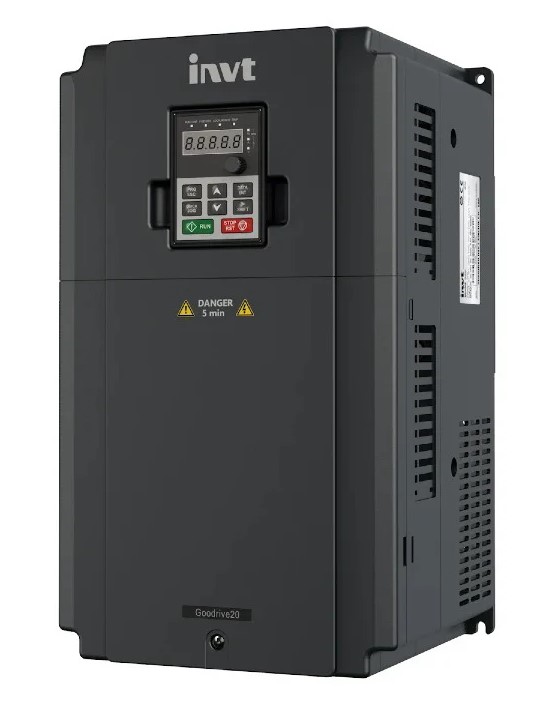
3. RS485/Modbus VFD Control
For modern VFD-based tubewells, a more intelligent method is direct communication between the remote controller and the VFD.
A common arrangement is:
Mobile Phone → SMS → Smart Controller → RS485/Modbus → VFD → Pump
RS485 and Modbus are often mentioned together, but they are not exactly the same thing.
RS485 is commonly used as the electrical communication interface.
Modbus RTU is a communication protocol that can operate over an RS485 network.
Modbus was designed for communication between industrial devices and provides standardized ways for a controller to read and write device data.
When supported by the VFD, Modbus communication can allow an external controller to perform actions such as:
- start the VFD;
- stop the VFD;
- reset certain faults;
- change operating references;
- read the VFD status;
- and access available operating parameters.
Commercial VFD documentation also shows that Modbus control words can be used for functions including start, different stop modes, fault reset and parameter access.
Relay Control vs RS485/Modbus Control
This difference is important when choosing a GSM tubewell controller.
| Feature | Relay / Digital Input | RS485/Modbus |
|---|---|---|
| Start/stop command | Yes | Yes |
| Simple installation | Usually | Requires configuration |
| VFD running feedback | Requires extra wiring | Can often be read digitally |
| Fault-code reading | Usually no | Often possible |
| Current monitoring | Usually no | Often possible |
| Voltage monitoring | Usually no | Often possible |
| Frequency monitoring | Usually no | Often possible |
| Multiple VFD parameters | Limited | Much better |
| Diagnostic capability | Basic | Advanced |
| VFD compatibility requirements | Digital input | Supported RS485/protocol/registers |
The exact data available depends on the VFD manufacturer, model and communication register map.
That is why RS485/Modbus compatibility must be confirmed for each VFD model.
Why RS485/Modbus Can Be Better Than a Simple GSM Relay
Imagine that you send an SMS to start your tubewell.
With a basic relay controller:
SMS sent → relay activated.
You may receive a reply saying that the relay has been activated.
But that reply may only confirm the controller’s output—not necessarily the actual VFD operating state.
With a controller that communicates directly with the VFD:
SMS → controller → Modbus command → VFD → VFD status → SMS reply
The controller can potentially ask the VFD:
Are you actually running?
It can then report the result back to the user.
This creates VFD-confirmed feedback instead of simply assuming that a relay command successfully started the pump.
That distinction is especially valuable for unattended agricultural water-pump installations.
What Information Can Be Read From a VFD?
Depending on the VFD and its available Modbus registers, a smart remote VFD monitoring system may be able to access information such as:
- running/stopped status;
- output frequency;
- reference frequency;
- output current;
- output voltage;
- DC bus voltage;
- motor speed;
- load or torque information;
- operating state;
- fault state;
- fault code;
- runtime;
- and other VFD parameters.
Not every VFD exposes every parameter, so actual capability depends on the specific drive.
This is one reason a VFD remote monitoring controller can offer considerably more functionality than a simple GSM relay.
4. GSM/SMS + RS485: A Practical Combination
For remote agricultural tubewell control, GSM/SMS and RS485/Modbus can complement each other.
They perform two different jobs.
GSM/SMS handles the long-distance communication:
Farmer’s Phone ↔ Cellular Network ↔ Tubewell Controller
RS485/Modbus handles local industrial communication:
Tubewell Controller ↔ VFD
The complete system becomes:
User → SMS → GSM Controller → RS485/Modbus → VFD → Water Pump
and, for feedback:
VFD → RS485/Modbus → Controller → SMS → User
This architecture provides the convenience of SMS remote control together with the intelligence available from direct VFD communication.
5. Why Wi-Fi Is Often Not Ideal for Remote Tubewell Control
Wi-Fi is excellent in homes, offices and locations where reliable network infrastructure already exists.
But a remote agricultural tubewell is a different environment.
Many tubewells are installed:
- far from a farmhouse;
- in open agricultural land;
- outside normal router coverage;
- at sites without fixed broadband;
- or at locations where maintaining a router and internet connection adds complexity.
Research on digital agriculture continues to identify limited or unreliable field-level connectivity as a major challenge in rural and remote areas.
For conventional Wi-Fi remote control, the installation may require:
Tubewell Controller → Wi-Fi Router → Internet Service → Cloud Server → Mobile App
If the router loses power, internet service goes down, the Wi-Fi connection fails, or cloud access becomes unavailable, remote operation can be affected.
That does not mean Wi-Fi is bad technology.
It means site Wi-Fi is not always the best primary communication method for a remote farm pump.
Local Wi-Fi Hotspot Is Different
There is another useful way to use Wi-Fi.
A controller can create its own local Wi-Fi hotspot, sometimes called AP Mode or Access Point Mode.
In that case:
Phone → Device Wi-Fi Hotspot → Local Webpage
No internet connection is required.
This can be useful when the farmer, installer or technician is physically near the tubewell.
For example, local AP Mode can be used for:
- setup;
- configuration;
- diagnostics;
- local ON/OFF control;
- parameter viewing;
- schedule configuration;
- or maintenance.
However, a local hotspot normally works only within local wireless range.
It is therefore different from controlling a tubewell remotely from another village or city.
For long-distance control, another communication method such as SMS or internet-based cellular connectivity is required.
6. Mobile App and Internet-Based Tubewell Control
Another approach is an IoT tubewell controller using a mobile app.
A typical architecture may look like:
Mobile App → Internet/Cloud → 4G/Wi-Fi Controller → VFD → Water Pump
This approach can provide a richer user interface than SMS.
Possible capabilities include:
- live pump status;
- graphical dashboards;
- historical data;
- notifications;
- multiple tubewells on one account;
- water-use records;
- remote settings;
- schedules;
- reports;
- user management;
- and advanced farm-management features.
App-based control can be an excellent choice where reliable internet connectivity exists and the user wants detailed monitoring.
However, it creates a different dependency:
remote operation requires internet connectivity between the field device and the cloud/app infrastructure.
This is why SMS control and app control should not always be considered direct replacements for each other.
They solve somewhat different requirements.
SMS Controller vs Mobile App Controller
| Requirement | SMS/GSM | Mobile App/IoT |
|---|---|---|
| Internet required | No data internet required | Usually yes |
| Smartphone required | No | Usually yes |
| Works through normal SMS | Yes | No |
| Remote ON/OFF | Yes | Yes |
| Rich dashboard | Limited | Excellent |
| Historical graphs | Limited | Excellent |
| Cloud reports | No/limited | Yes |
| Easy basic commands | Excellent | Excellent |
| Multiple-site dashboard | Limited | Excellent |
| Suitable where internet is weak | Strong option | Depends on connectivity |
For some farms, SMS-first control is the better choice.
For others, an IoT mobile-app pump controller provides greater monitoring and reporting capability.
Future systems may also combine several communication methods.
7. 4G/LTE Cellular Control
Instead of connecting the field controller to a Wi-Fi router, an IoT tubewell controller can contain its own cellular modem.
The architecture becomes:
Mobile App → Internet → Cellular Network → 4G Controller → VFD
This removes the need for a broadband router at the tubewell.
It is a strong option for advanced remote pump monitoring where mobile-data coverage is reliable.
Possible applications include:
- real-time VFD monitoring;
- live dashboards;
- remote irrigation scheduling;
- fault notifications;
- runtime history;
- energy monitoring;
- multiple-farm management;
- and cloud reporting.
The trade-off is that it still depends on internet/data connectivity and usually requires more infrastructure than basic SMS control.
8. LoRa and Long-Range Radio Control
Another technology used in agriculture is LoRa or other long-range radio communication.
For example:
Tubewell Controller → LoRa Radio → Farm Gateway → Internet/Local System
LoRa can provide long-distance, low-power communication between field devices and a central gateway.
It can be useful when:
- several pumps or sensors exist across one farm;
- one centrally located gateway can serve multiple devices;
- low-data-rate telemetry is sufficient;
- or mobile connectivity is poor at individual field locations.
However, LoRa normally requires additional gateway and network planning.
For a farmer who simply wants to control one remote tubewell from an ordinary phone, SMS can be much simpler.
9. PLC and SCADA Pump Control
Industrial farms, water-management systems and large pumping stations may use PLC and SCADA systems.
A PLC can control:
- pumps;
- valves;
- pressure sensors;
- tank levels;
- flow meters;
- VFDs;
- alarms;
- and multiple interlocks.
SCADA can then provide a supervisory interface for monitoring and control.
This approach is powerful but generally more complex and expensive than a standalone GSM pump controller.
It makes more sense where many pieces of equipment need to operate as one coordinated system.
10. Timer and Schedule-Based Pump Control
Not every control action needs to come from a mobile phone.
A tubewell controller can also use timers and schedules.
For example:
Run the pump for 90 minutes and automatically stop it.
Or:
Start at a configured time and stop at another configured time.
Timer-based control can help reduce the possibility of a pump being accidentally left running longer than required.
Schedule control can also support routine irrigation.
These functions are particularly useful when combined with remote status checking.
How to Control a Tubewell Through SMS Without Internet
A typical advanced setup consists of four major components.
Step 1: Install the GSM/SMS Controller
The controller is installed in or near the VFD control panel.
It contains a SIM-based cellular communication system capable of receiving SMS commands.
Step 2: Connect the Controller to the VFD
Depending on the design, this connection may use:
- VFD digital inputs and relay contacts;
- RS485/Modbus;
- or a combination of both.
For advanced monitoring, RS485/Modbus is generally more useful because the controller can exchange data with the VFD instead of only switching a contact.
Step 3: Configure Authorized Mobile Numbers
A secure SMS controller should restrict control to approved phone numbers rather than accepting commands from any sender.
Typically there may be:
- a master number;
- additional authorized users;
- or installer/admin access.
Step 4: Send an SMS Command
The authorized user sends a command such as:
ON
The controller receives the SMS, verifies the sender and sends the appropriate command to the VFD.
Step 5: Verify the VFD Response
In a Modbus-based system, the controller can check the actual drive status rather than assuming the command worked.
It may determine that the VFD is:
- running;
- stopped;
- in fault condition;
- or unavailable due to a communication problem.
Step 6: Send Feedback to the User
The controller can then reply by SMS.
Instead of simply saying:
Command received
an advanced controller may provide information such as:
Pump running
or:
VFD fault detected
depending on the system capabilities.
More Than Remote ON/OFF
A modern SMS pump controller can do much more than operate a relay.
When integrated correctly with a compatible VFD, remote-control features may include:
1. Remote Start and Stop
Turn the tubewell ON or OFF using an authorized mobile number.
2. Pump Status Checking
Check whether the system is running or stopped.
3. VFD Fault Information
Request information about the current VFD fault.
4. Current and Voltage Monitoring
Read supported electrical parameters from the VFD.
5. Frequency Monitoring
Check the operating frequency of the water-pump drive.
6. Dry-Run Protection
Use available operating information and configured protection logic to identify potential no-water or abnormal-load conditions.
7. Timer Control
Run the pump for a specified period and then stop automatically.
8. Schedule Control
Configure scheduled pump operation where supported.
9. Runtime Monitoring
Keep track of pump operating sessions and runtime.
10. Service Reminders
Generate maintenance reminders based on configured intervals or runtime.
11. Event Records
Maintain useful records of pump operation and faults.
The availability of each function depends on the controller, VFD and installation.
Can SMS Control Work With a Non-Solar Tubewell?
Yes—provided the controller and VFD are compatible.
The communication concept itself does not depend on solar panels.
A VFD-based water-pump installation may receive power from:
- solar PV;
- the electrical grid;
- a generator;
- a hybrid power system;
- or another suitable power source.
From the remote controller’s perspective, the important questions are generally:
- Is a compatible VFD installed?
- How can the VFD receive remote commands?
- Does it support digital inputs?
- Does it support RS485/Modbus?
- Which registers and parameters are available?
- Is compatible cellular SMS service available at the site?
Therefore, while solar tubewell remote control is a very common agricultural application, SMS-based VFD control is not inherently limited to solar-powered pumps.
AabNex SMS: SMS-First Tubewell VFD Control Without Internet
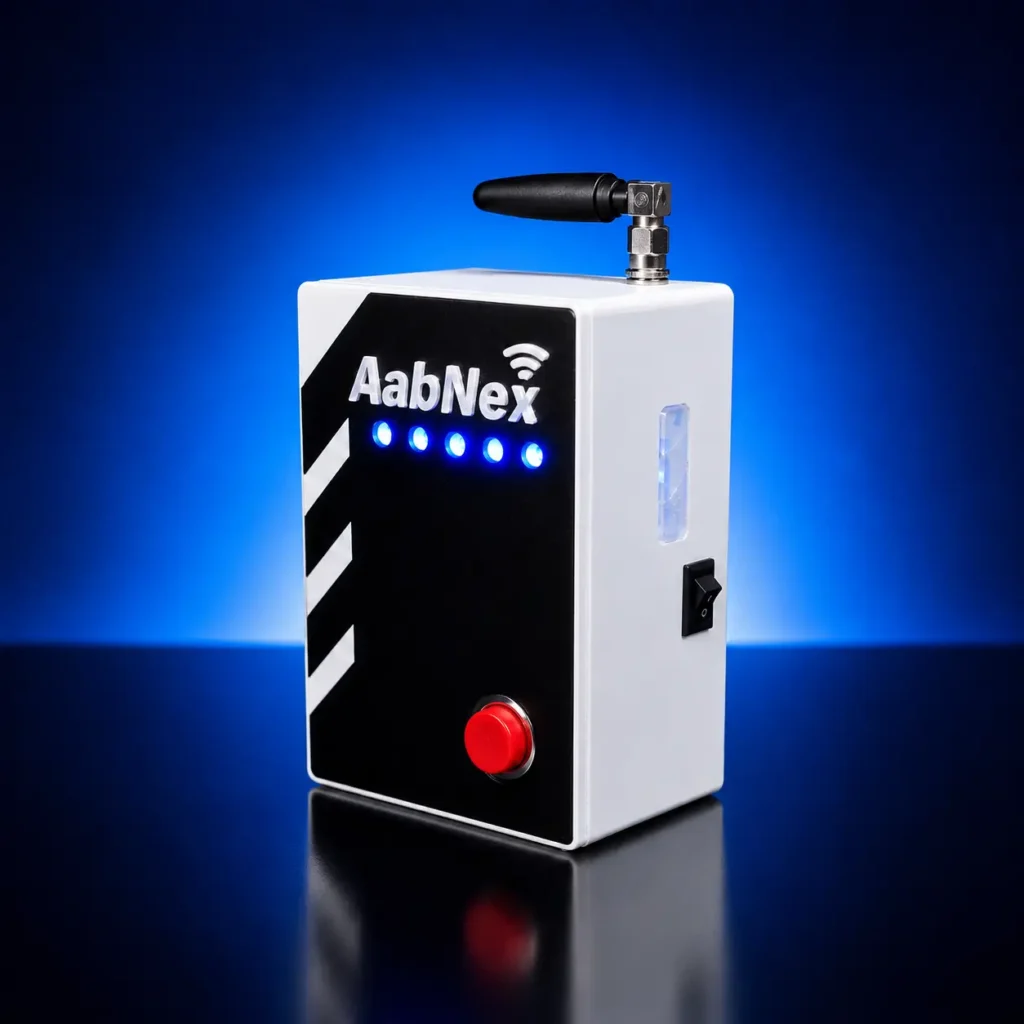
For users who want a ready-made commercial solution rather than building a GSM relay project, AabNex SMS by Arduino Expert is designed for compatible VFD-based agricultural tubewell systems.
AabNex SMS uses an SMS-first architecture for remote operation while communicating with supported VFDs through RS485/Modbus.
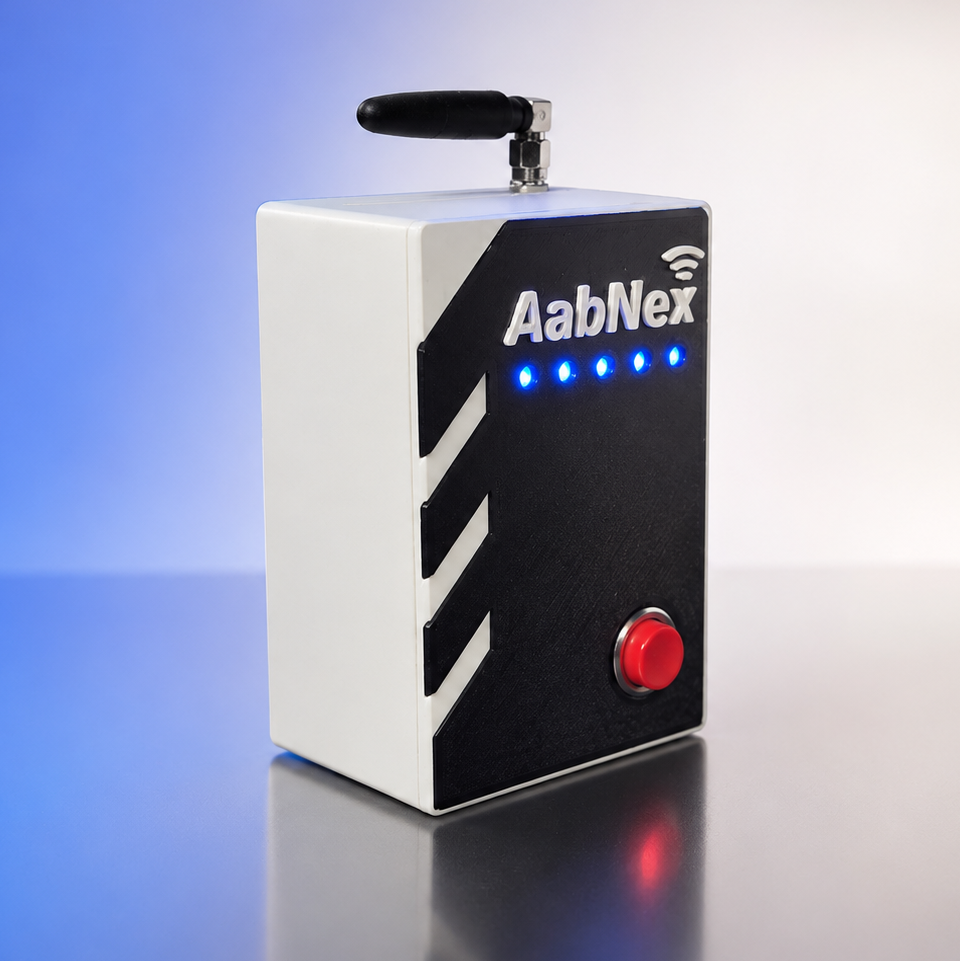
Its current product capabilities include:
- SMS-based remote ON/OFF control;
- local physical button control;
- local AP Mode hotspot webpage;
- RS485/Modbus VFD communication;
- VFD-confirmed ON/OFF feedback;
- VFD parameter monitoring;
- fault information;
- dry-run protection;
- timer and scheduling functions;
- runtime/session information;
- event and fault records;
- service reminders;
- and protection/maintenance features.
It does not require a mobile app or cloud subscription for its SMS-based remote-control functions. An active compatible SIM and SMS service are still required.
Learn how AabNex SMS works:
AabNex SMS Tubewell Controller Without Internet
Check price, features, specifications and VFD compatibility:
AabNex SMS VFD Controller Product Page
Why AabNex Uses RS485/Modbus Instead of Only a Relay
A relay is useful for basic ON/OFF control.
But AabNex SMS is intended to communicate directly with compatible VFDs.
This allows the controller to do more than simply close a relay contact.
Depending on VFD compatibility, direct communication can provide:
- actual VFD running status;
- frequency information;
- output current;
- output voltage;
- DC bus information;
- fault status;
- fault codes;
- load information;
- and other available parameters.
This makes it possible to build a remote VFD monitoring and control system, not merely a remote switch.
When Is a Basic GSM Relay Enough?
A basic relay-based GSM controller can still be suitable when the only requirement is:
START the pump
and:
STOP the pump
It can be a low-cost option if no detailed VFD data is required.
However, users should understand its limitations.
If you need:
- confirmed VFD status;
- fault diagnosis;
- electrical parameter monitoring;
- dry-run logic using VFD data;
- runtime information;
- or more advanced protection,
then direct VFD communication becomes considerably more valuable.
When Is an App-Based Controller Better?
SMS is not necessarily the best solution for every customer.
A mobile-app/IoT controller may be more appropriate when the user wants:
- graphical dashboards;
- real-time charts;
- long-term historical data;
- multiple tubewells in one account;
- cloud reports;
- advanced notifications;
- farm-management features;
- or detailed remote configuration.
This is a different class of system.
A useful way to think about the two approaches is:
SMS Controller
Simple remote operation without dependence on internet data
IoT/App Controller
Advanced remote monitoring and data management using internet/cloud connectivity
The right choice depends on the farm and the user’s requirements.
Choosing the Right Tubewell Remote-Control Method
Before selecting a system, ask the following questions.
Do you only need remote ON/OFF?
A relay-based GSM controller may be sufficient.
Do you need actual VFD feedback?
Consider RS485/Modbus integration.
Do you need to know current, voltage, frequency or fault codes?
Choose a controller capable of communicating directly with the VFD.
Is internet unreliable or unavailable at the site?
SMS-based control may be a better option than cloud-dependent Wi-Fi control.
Do you need dashboards and historical reports?
An IoT/mobile-app controller may be more suitable.
Do you manage many pumps across a large farm?
Consider an IoT, LoRa, PLC or SCADA architecture depending on scale.
Is local control important?
Make sure the installation retains a physical button, VFD keypad or another practical local-control method.
Important Installation Considerations
Remote pump control should not be treated as a simple DIY switch installation.
A tubewell motor can involve significant electrical power, rotating machinery and high-pressure water systems.
The controller should be installed by a qualified person familiar with:
- VFD wiring;
- motor-control systems;
- electrical protection;
- grounding;
- communication wiring;
- VFD parameter configuration;
- and the specific pump installation.
Safety interlocks, emergency stopping arrangements and manufacturer requirements must remain effective after remote control is added.
A remote-start system should never bypass necessary electrical or mechanical protection.
SMS, Relay, RS485, Wi-Fi or IoT: Which Is Best?
There is no universal answer.
- For simple local operation, use buttons or the VFD keypad.
- For basic remote ON/OFF, a GSM relay may be enough.
- For intelligent VFD control and monitoring, RS485/Modbus provides much greater capability.
- For remote control without internet data, SMS is a practical option.
- For dashboards, cloud history and advanced remote management, an IoT mobile-app system can be better.
- For large multi-device agricultural networks, LoRa, PLC or SCADA may be appropriate.
In many VFD-based tubewell installations, a particularly practical architecture is:
SMS for long-distance communication + RS485/Modbus for local VFD communication.
This combination allows a farmer to control a water pump remotely without depending on Wi-Fi or cloud connectivity while still receiving useful information from the VFD.
Final Thoughts
Remote tubewell control does not have to mean installing Wi-Fi at a farm or depending on a mobile app.
A properly designed SMS water-pump controller can allow an agricultural tubewell to be started, stopped and monitored using ordinary text messages.
For simple systems, this can be achieved using a GSM controller and VFD digital inputs.
For advanced systems, direct RS485/Modbus VFD communication can add confirmed operating status, fault information, parameter monitoring and additional protection features.
And importantly, this concept is not restricted to solar-powered pumps.
Whether a VFD-based tubewell is powered by solar PV, grid electricity, generator or a hybrid source, the remote-control problem is fundamentally the same: the user needs a reliable way to communicate with the pump-control system.
For locations where reliable site internet is not available—or where the farmer simply wants an independent, straightforward method of remote operation—SMS-based tubewell control remains a practical solution.
For a ready-made system designed around SMS remote control and direct VFD communication, explore AabNex SMS by Arduino Expert. Contact Arduino Expert.
View AabNex SMS Features and Specifications
Frequently Asked Questions
Can I control a tubewell from a mobile phone without internet?
Yes. A GSM/SMS tubewell controller can receive normal SMS commands from an authorized mobile number without requiring Wi-Fi or mobile internet data. The site still needs compatible cellular SMS service.
Can I start a water pump using SMS?
Yes. An SMS pump controller can interpret an authorized SMS command and send the required start command to the VFD or pump-control system.
Does an SMS pump controller need Wi-Fi?
No. SMS-based remote control does not require Wi-Fi.
Some controllers may additionally provide a local Wi-Fi hotspot for configuration or nearby control, but this is different from relying on an internet-connected Wi-Fi router.
Can SMS control work where there is no internet?
Yes, provided compatible cellular SMS service is available.
“No internet” should not be confused with “no cellular network.” The controller still needs a mobile network capable of delivering SMS.
What is a GSM tubewell controller?
A GSM tubewell controller is a remote-control device that uses a cellular connection—commonly SMS—to control or monitor a tubewell water pump.
Basic versions may operate relays, while more advanced systems can communicate directly with VFDs.
What is the difference between a GSM relay and a VFD SMS controller?
A basic GSM relay changes the state of an electrical contact.
A VFD-integrated SMS controller can potentially communicate with the drive itself, allowing actual status, parameters and faults to be monitored in addition to ON/OFF control.
Can a VFD be controlled using RS485?
Many VFDs support serial communication such as RS485 with protocols including Modbus RTU, but compatibility and available control functions depend on the VFD model and configuration.
Is RS485 the same as Modbus?
No.
RS485 is commonly used as the physical serial communication interface, while Modbus RTU is a communication protocol that can operate over RS485.
Is relay control or RS485 better for a tubewell?
For basic ON/OFF operation, relay control may be sufficient.
For advanced VFD control, confirmed status, parameter monitoring and fault information, RS485/Modbus generally provides significantly more capability when the VFD supports it.
Can a non-solar tubewell use an SMS controller?
Yes. The remote-control method is not dependent on solar panels.
A compatible VFD-based water pump can potentially use the same control approach whether the VFD receives power from solar PV, grid electricity, generator or a hybrid system.
Why not use Wi-Fi for a remote tubewell?
Wi-Fi works well where reliable network infrastructure exists, but many agricultural tubewells are far from a router or fixed internet connection.
Using SMS can avoid dependence on a farm-site Wi-Fi router and internet service for basic remote control.
Can Wi-Fi still be useful at a tubewell?
Yes.
A device can create a local Wi-Fi hotspot for nearby configuration and control without internet.
Wi-Fi can also be suitable for full remote operation when reliable internet infrastructure is available at the site.
Can I monitor VFD current and frequency remotely?
Yes, if both the remote controller and VFD support the required communication and parameters.
For example, a Modbus-compatible system may be able to read current, voltage, frequency, status and fault information depending on the VFD.
Can I control my tubewell through a mobile app instead of SMS?
Yes. IoT pump controllers can use mobile apps and cloud services for remote control and monitoring.
App-based systems normally require internet connectivity but can provide richer dashboards, history, reports and multi-site management than SMS alone.